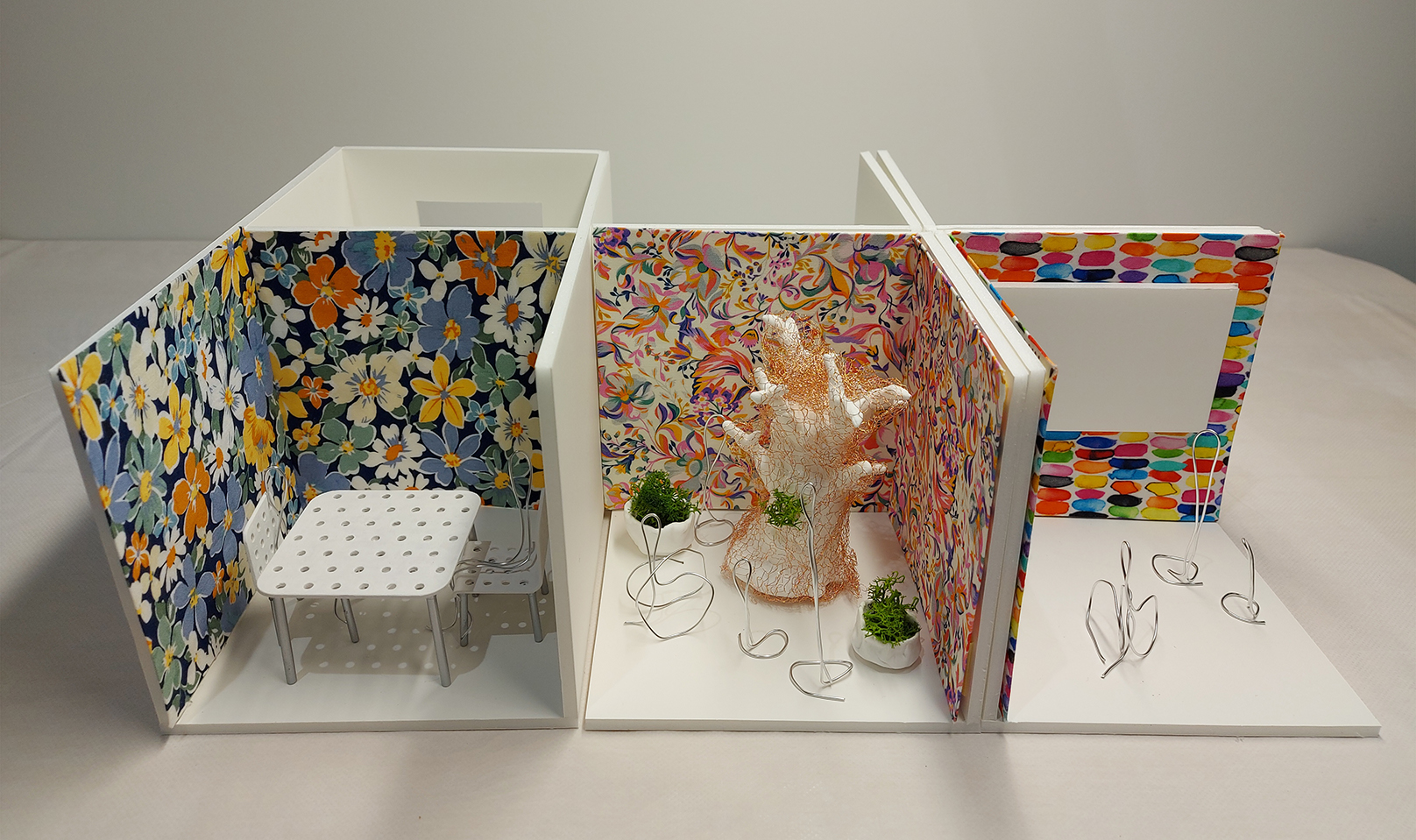
[R&D Residency at Adelaide University_1 – 13 March 2026]
I am back at the familiar Body In Mind (BIM) lab at Adelaide University, formerly the University of South Australia. I first came here in 2014–15 to work with the team of pain scientists, supported by Accessible Arts and later through the Synapse Residency with ANAT.
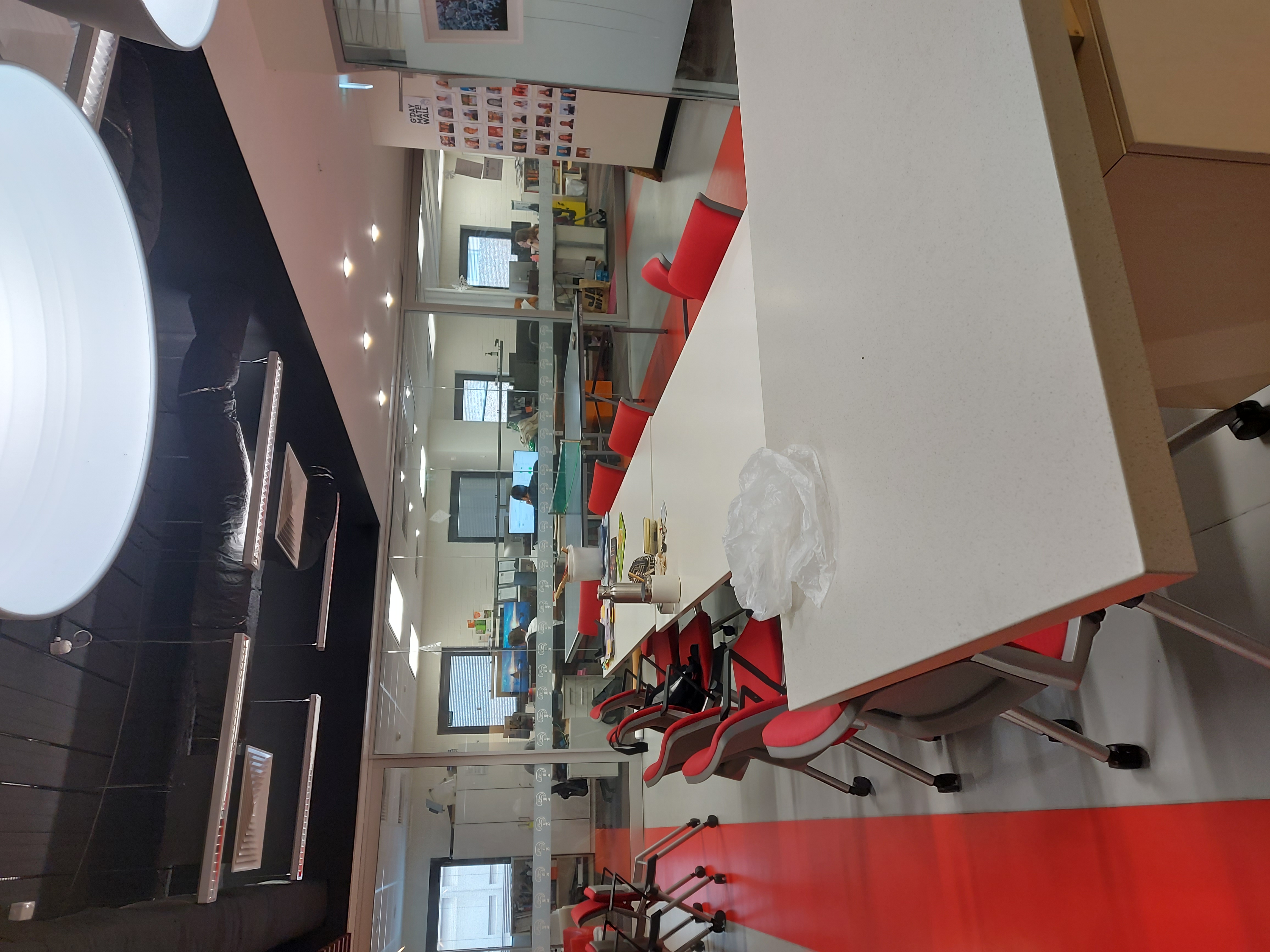
Body In Mind common area, Adelaide University
Back in 2014, it was an exhilarating moment for me as an emerging artist. I had never had an artist residency before — let alone an interstate one — and I had never worked with scientists or anyone outside the art discipline. Everything was new.
I think it was also BIM’s first time hosting an artist‑in‑residence, so they welcomed me with openness and curiosity, not knowing what would unfold. The team was incredibly generous, including me in every activity, trial, guest talk, and retreat, and giving me a one‑on‑one crash course in the neuroscience of pain. Most importantly, they believed me when I said I lived with persistent pelvic pain. No one asked me to justify or prove it.
Anyone living with pain, an invisible illness, or disability knows how rare that is. Being believed is often the hardest part. When the entire team accepted my experience without question, I had to pause to process the gift they had given me. I will never forget the shock, the relief, the gratitude — and the grief. It made me wonder how different my life might have been if my pain had been believed from the beginning. What would our world look like if being believed and heard were the norm?
That moment has stayed with me ever since. It has become my creative motto, my activism, and the compass that guides how I imagine the future. What would our world look like if someone could simply say “I am unwell” or “I am in pain” and be met with belief instead of suspicion? What would it take to build a culture where being heard is the default, not the exception? These questions have shaped every project I’ve made since — including this new one.
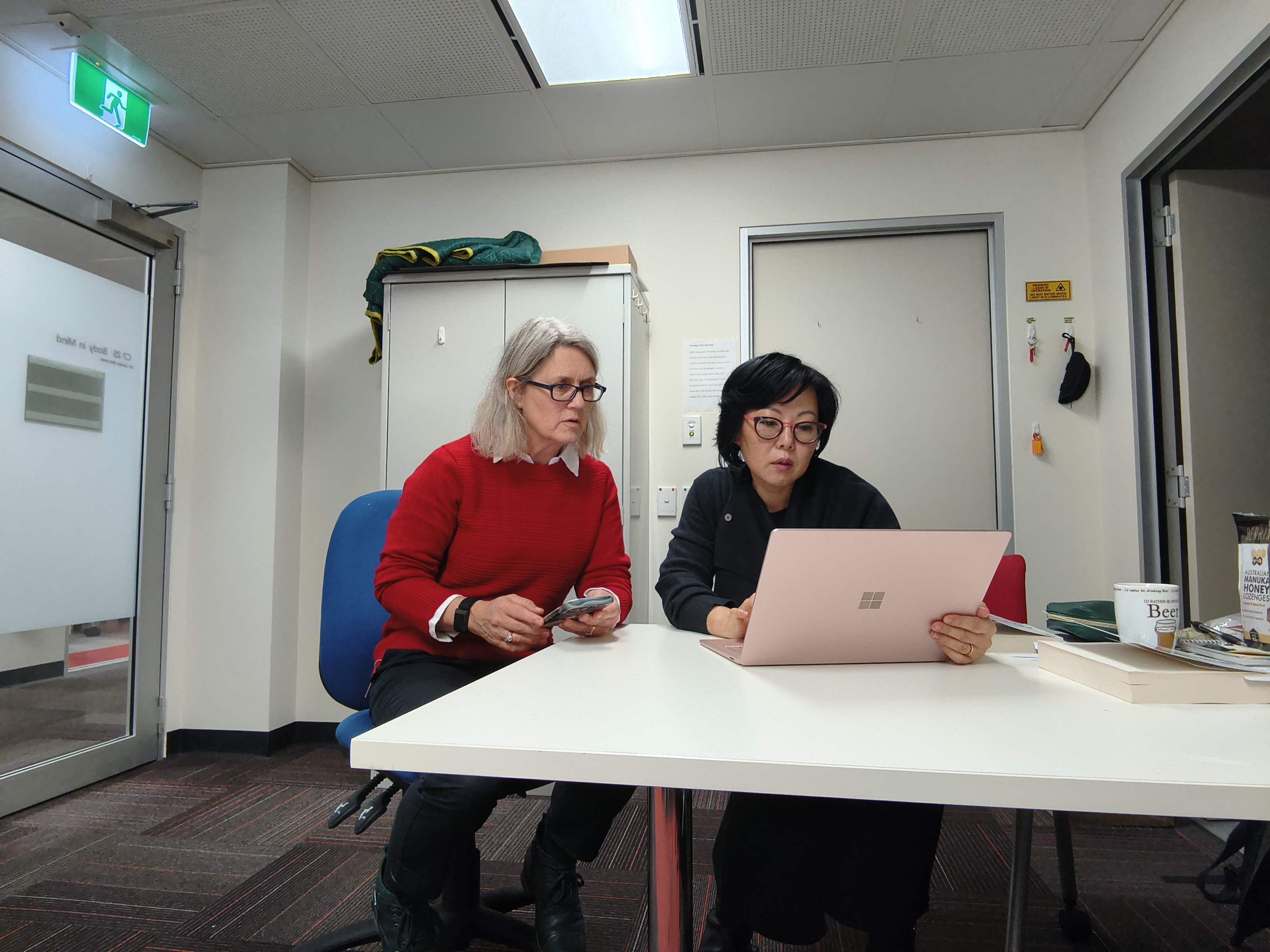
Dr Carolyn Berryman and I brainstorm the narrative development of the project by creating a digital mind map in her office at Adelaide University where I work during the Art-Science residency.
The resulting collaborative art‑science project was SEEING IS BELIEVING. Looking back, it was one of those meant‑to‑be projects where every complex step aligned at exactly the right moment. Working with the BIM team felt not only collegial but also familial. That warmth and sense of belonging stayed with me, and now, twelve years later, I have been welcomed back to work on a new project. There are many new researchers now, but the vibe is the same.
Dr Carolyn Berryman is one of the researchers I have wanted to collaborate with since I met her. And here I am in 2026, finally bringing her a project we can work on together for the next several years – AJUMMA* WELLBEING CLINIC – supported through ANAT’s Bespoke program and Creative Australia.
*AJUMMA [Ah-Joom-Mah] – a derogatory Korean term for middle-aged women, implying they are ‘no longer worthy of the male gaze’ or ‘angry dumpy hags’.
So, how does this new project relate to my previous work with pain scientists, and why Carolyn? The answer isn’t short or direct, but here is why she is my go‑to science collaborator.
AJUMMA WELLBEING CLINIC is about menopause — but not only about menopause. It is about the broader psycho-social perceptions and health issues women experience later in life. As a diasporic CripQueer artist, I am careful about who is included and how.
NOTE: In this project, I refer to “women” and “menopausal women” as those who identify as women and/or those born with a genetic makeup that necessitates undergoing female menopause — peri-, menopause, and post-menopause — usually from 35 years old onward, though sometimes earlier or later. Perimenopause is when the sex hormones begin to decline, a process that can take many years until menstruation ceases. Menopause is, in fact, exactly one day after one year without menstruation. After this one day, women are in the post-menopause stage until they die.
When women reach perimenopause and beyond, hormone levels inevitably fall below what is needed for reproductive capability and for maintaining quality of life. Of course, women and their hormones are not only about producing babies — but society has long valued women as if they were.
Once women pass reproductive age — once we outlive the life phase of our ovaries — there is a steep decline in standard care and knowledge about our wellbeing. This often comes as a shock. The care we assumed would be there simply isn’t available. This is the second half of women’s lives. That’s a lot of years of neglect.
Thanks to modern medicine, people now live much longer, but longevity does not guarantee quality of life. Quality of life is how well we can thrive in good health and happiness. Women statistically live longer than men, yet their quality of life is often worse. Hormones — or the lack of them — play a significant role.
We all need hormones to function well, and as we age, hormone levels fall, not gently but in choppy, stormy waves. When they drop, they can trigger a wide range of symptoms and illnesses — in both men and women — yet women face clear disparities in care. Women experiencing symptoms related to ageing and hormonal decline must fight hard to be believed, validated, or taken seriously. As with pain, being believed and finding clinicians educated in this area is difficult. As with pain, medical schools devote an average of 30 minutes to menopause across the entire curriculum.
And just like pain, our immune responses, which protect us from harm, can remain in a high-alert state during menopause, resulting in a chronic, overactive inflammatory state.
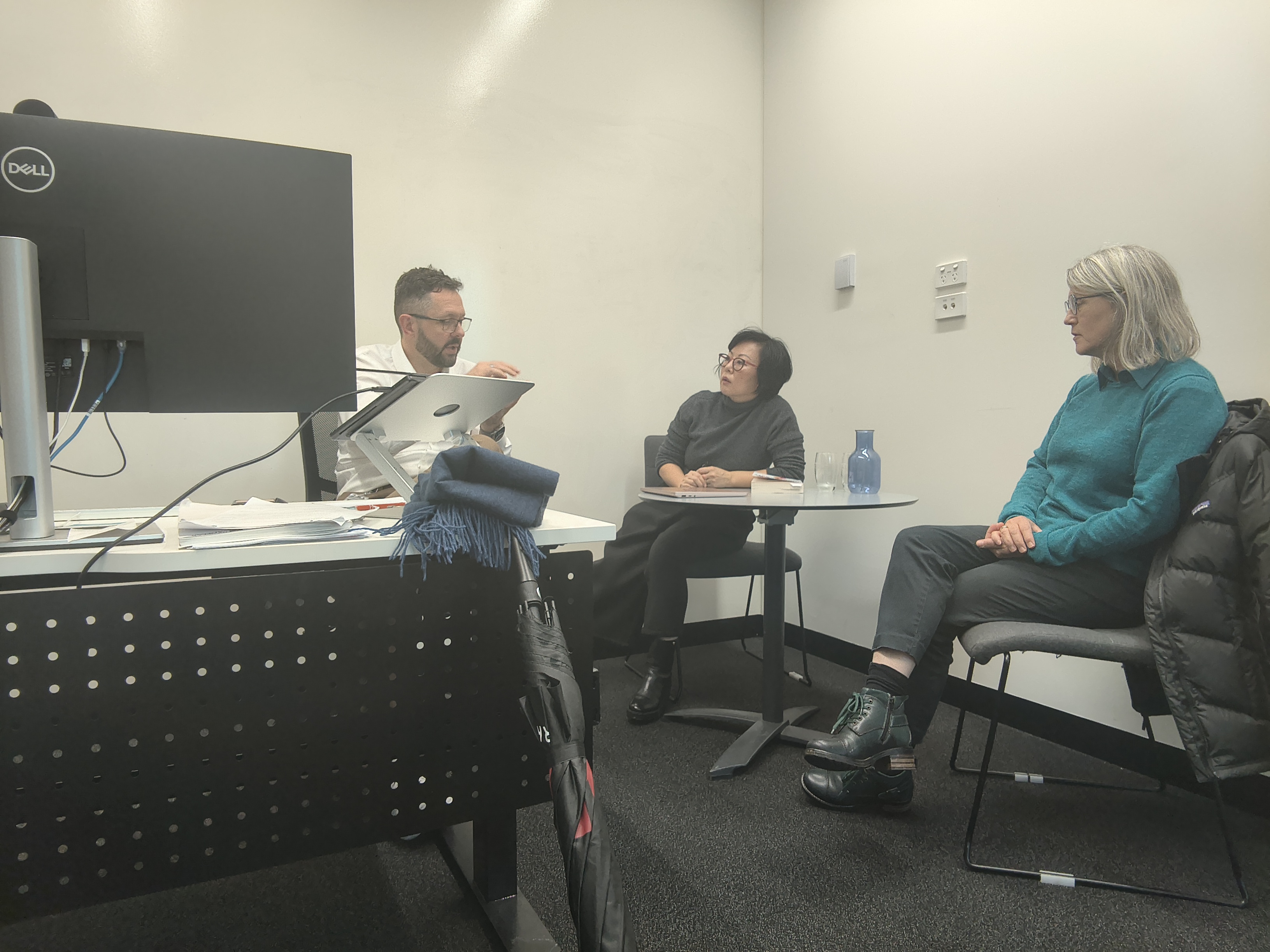
Prof Mark Hutchinson at his office at Adelaide University discussing inflammatory processes. Occasionally, Dr Carolyn Berryman kindly explains some of the complex components in plain English for me.
I have lived with endometriosis and adenomyosis for most of my adult life. Although I don’t have severe symptoms anymore, research shows that women with these conditions are more likely to experience worse menopausal symptoms. In my lived experience, I can definitely concur. So why is that? There is so much we still don’t know about menopause, as very little has gone into menopause research, but there are enough studies out there to improve the quality of women’s lives. Also, pain science and menopause share many overlapping mechanisms — something I often discuss with Carolyn and Professor Mark Hutchinson, who specialises in neuroimmune responses, inflammation, and pain.
As the project’s R&D unfolds over the next few years, we will explore all of this and more. We will ensure the artwork’s narrative includes the scientific knowledge participants need — absorbed not through lectures but through emotion, interaction, and embodied experience.