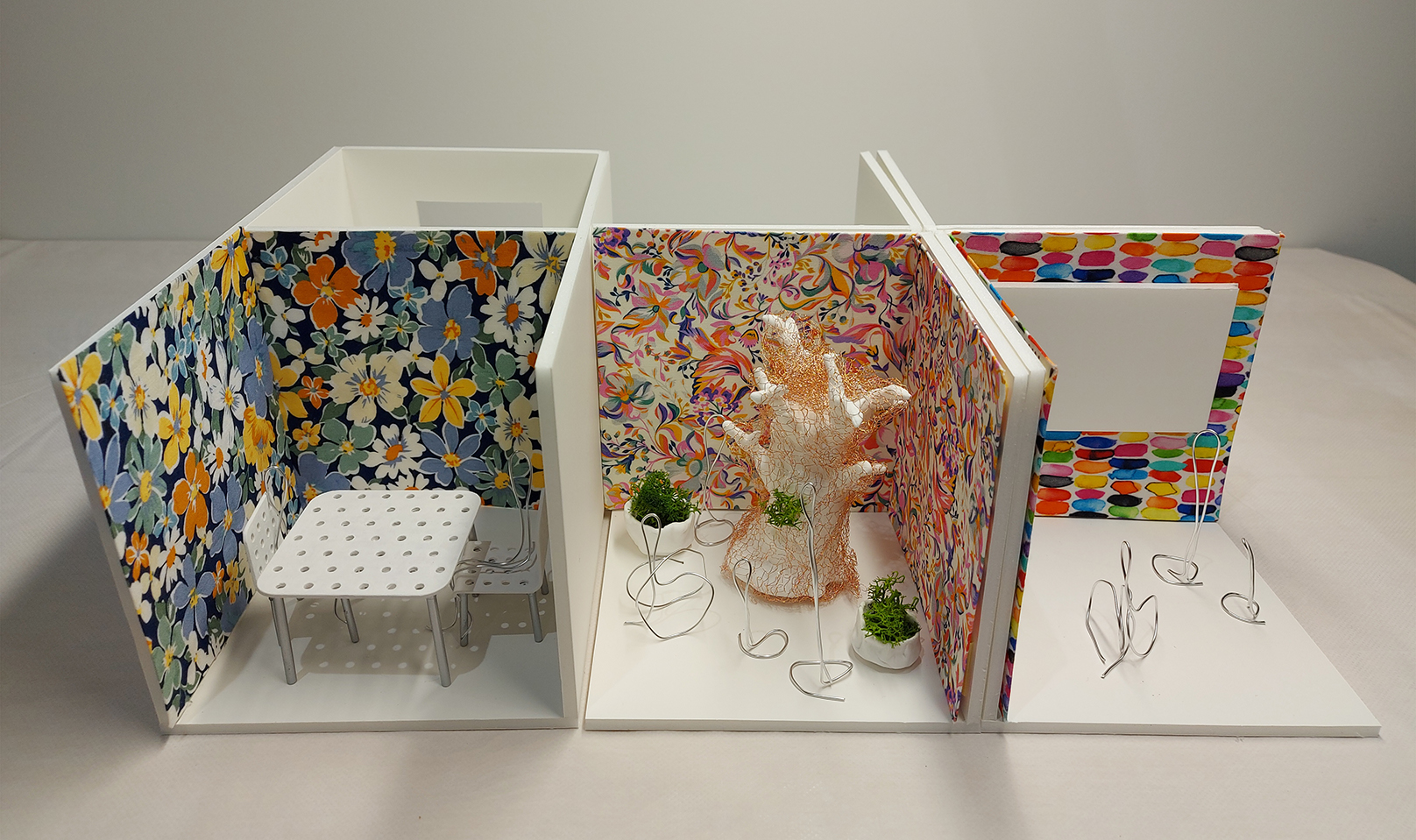
Ajumma [Ah‑Joom‑Mah] is a Korean gender‑ and age‑related derogatory term used to depict women in menopause, usually those in heterosexual marriage with a few obligatory children. It is a label for Korean menopausal women, implying they are “over the hill,” “no longer worthy of the male gaze,” “too loud, crazy, outspoken,” or that they’ve “let themselves go” in appearance — stereotypes that reduce them to caricatures rather than people. Today, no woman wants to be called Ajumma, as it is considered beyond the “attractive age.” I suppose “attractive age” must mean the reproductive age, because society still tends to value women most when they fall within that period.
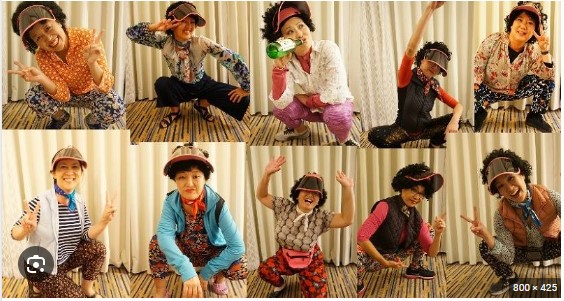
Stereotyped images of Ajumma. Image: Pinterest
Growing up in South Korea, I remember it was still a developing, low-income country. Unlike the current perception, the meaning of Ajumma was quite different back then. From my perspective as a child, I looked up to them, and I needed them to survive.
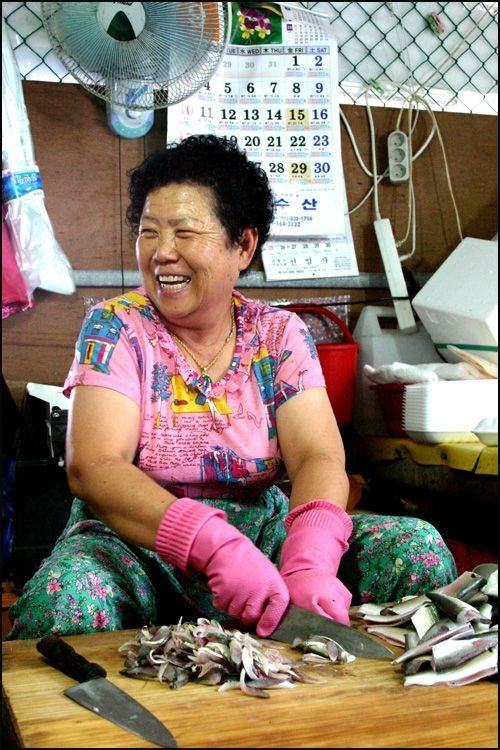
Ajumma in her tight perm, colourful functional clothes, pink rubber gloves, cleaning fresh fish at a market. Image: Pinterest
Ajumma silently served as the mighty backbone of everyday life, keeping families together through their stoic love and hard work. These middle‑ to low‑income women sustained their families’ wellbeing with their big hearts and wholesome traditional Korean food. They rarely had time to care for themselves because they had to put everyone else first, often feeding extended families while forgoing their own meals and sleep. Their clothes were functional, comfortable, easy to launder — but always with a colourful flair. Their cheap, tight, low‑maintenance perms became iconic, not because they didn’t care, but because they had no time to fuss. Through hardship and a close support network of friends, they learned to speak up for themselves and for each other. With little material wealth, they never held themselves back, driven by generous, soulful hearts, direct honesty, and well‑earned wisdom. Women worthy of respect.
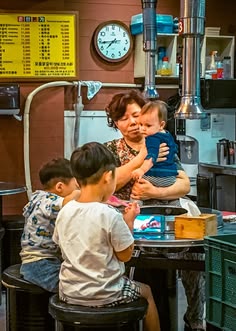
Ajumma with three small kids under her care whilst looking after the market. Image: Pinterest
In 1993, my family immigrated to Eora, Australia, and I didn’t think much about Ajumma again until 2024, when I began developing a project on women’s health. That’s when I realised I had become a middle-aged woman. It sounds strange, but many women will agree that the moment you realise you’re middle-aged often comes as a surprise.
Then came the second shock: I was now Ajumma age — but I wasn’t sure I could still call myself an Ajumma. I felt I wasn’t Korean enough. I also had this image of menopausal women as mostly white, middle-class — perhaps with a token sprinkle of women of colour in stock photos. I’d also heard the myth that Asian women don’t experience menopausal symptoms because they eat a lot of soy. Yet I was experiencing debilitating symptoms. Had I not eaten enough tofu in the occasional miso soup? Being autistic, I began researching menopause to calm my ever-growing anxiety.
I started with Ajumma. What I discovered confounded me. Not only had the meaning changed, but the Ajumma title had become the butt of a joke. It made me sad and upset. It made me wonder how my birth country — advancing rapidly in beauty culture, youthfulness, and global pop influence — had quietly left behind values that didn’t keep pace with modernity, including the Ajumma identity I had held dear since childhood.
This is how I would define AJUMMA IDENTITY, which I have grown to love and appreciate:
- They are frank and funny, known for giving unfiltered, unsolicited advice — often.
- They have cultivated wisdom and confidence through lived experience and share it freely.
- They know when to let go, but will fight hard when something isn’t fair.
- They know how to laugh — and laugh well.
- They like to sing and dance because it makes them feel good.
- They dress however they feel good in and don’t give a fxck about others’ opinions.
- They worked hard to nurture their families, and now that their children are grown, they feel entitled to rest more and take up more space — maybe even demand a seat or two on a crowded metro, usually more than one, since they travel in groups.
- They have strong networks of friends who support, boost confidence, and stand up for each other. There’s a saying: if you offend one Ajumma, you offend the whole group — and you won’t come out in one piece.
- They are full of energy. It’s a mystery to me how they have so much of it. Many women around me struggle with fatigue and low mood. I want to understand what gives Ajumma their energy so I can share it with participants in the artwork.

An empowered Ajumma. Image: Pinterest
I want to highlight some of these characteristics. My Korean creative producer and cultural dramaturg, Jin Yim, has also written beautifully about Ajumma, including their history and their infamous fashion style:
https://projectdari.notion.site/Ajumma-Running-30cfd7698c238045b499fe3981c6b796