AJUMMA WELLBEING CLINIC is a participatory art–science performance installation that reimagines menopause and Korean Ajumma identity through a speculative Social Prescribing framework.
What and who are Ajumma?
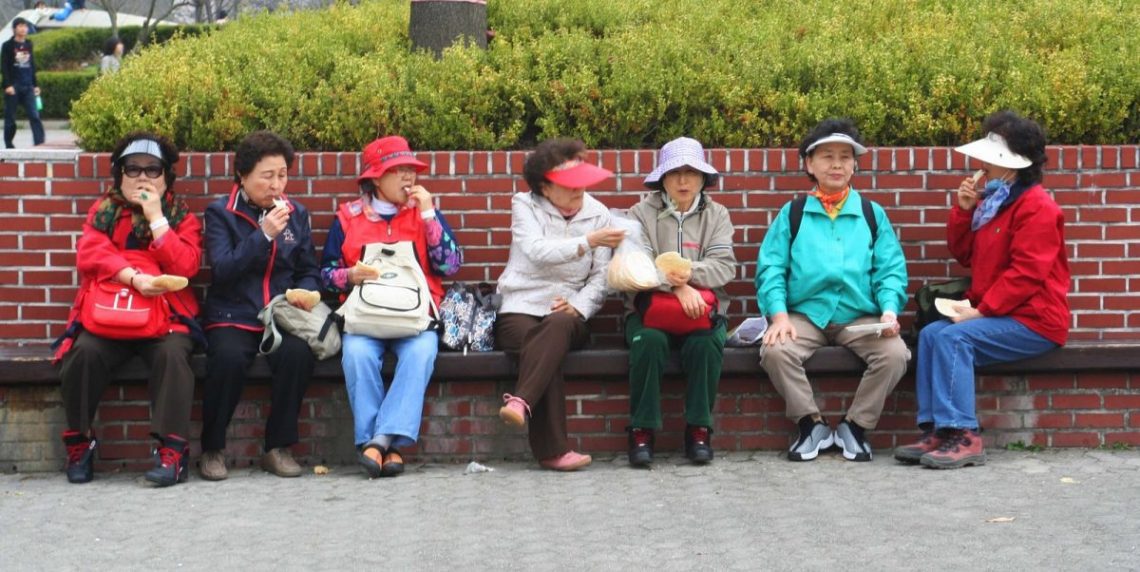
Ajumma sitting in a row on a public bench, sharing food. Notice their comfortable clothes, shoes, tight perm. Most of them are wearing hats to protect themselves from the sun. Image: Pinterest
Ajumma [Ah-Joom-Mah] means a Korean gender and age-related derogatory term depicting women in menopause. It is a title for Korean menopausal women to attribute them as ‘over the hill’, ‘no longer worthy of the male gaze’, ‘too loud, crazy, outspoken’, ‘they’ve let themselves go with their appearance as they’ve become too pudgy and no longer wear trendy clothes’. Currently, no woman wants to be called Ajumma as they are considered beyond the attractive age. I suppose ‘the attractive age’ must mean the reproductive age because the societal value for women is usually confined within the range of the reproductive period.
In partnership with ANAT through their Bespoke Program 2026—an opportunity I feel deeply privileged to receive—AJUMMA WELLBEING CLINIC challenges the stigmatising perceptions of menopausal women and Ajumma, whose experiences of dismissal, stereotyping, and invisibility closely mirror those of many menopausal women in Australia.
As a diasporic CripQueer artist who is now an Ajumma living on Wangal/Sydney, I bring an intersectional feminist approach to this work. Together with my collaborators, I overturn the dominant patriarchal model of menopause, which has long served medical misogyny by dismantling womanhood. Instead, we centre an alternative matriarchal model that prioritises visibility, shared cultural knowledge, and community connection, while still validating the challenges menopausal women experience.
This approach guides the development of the participatory performance installation. We plan to select several key menopausal symptoms and transform them into hybrid treatment–retreat rooms shaped by the principles of Social Prescribing.
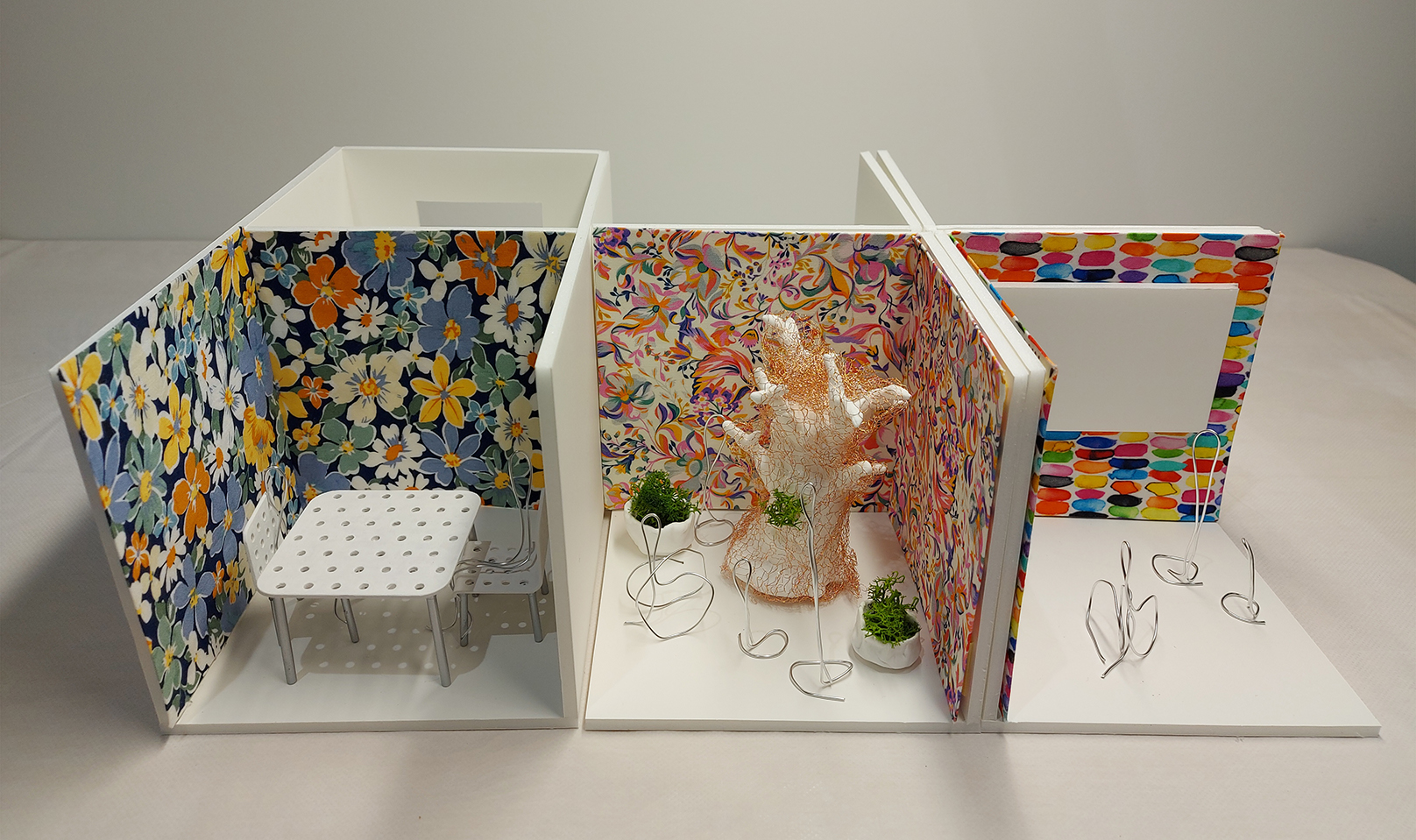
A maquette sketch idea for the project with hybrid treatment-retreat rooms. Image: Eugenie Lee
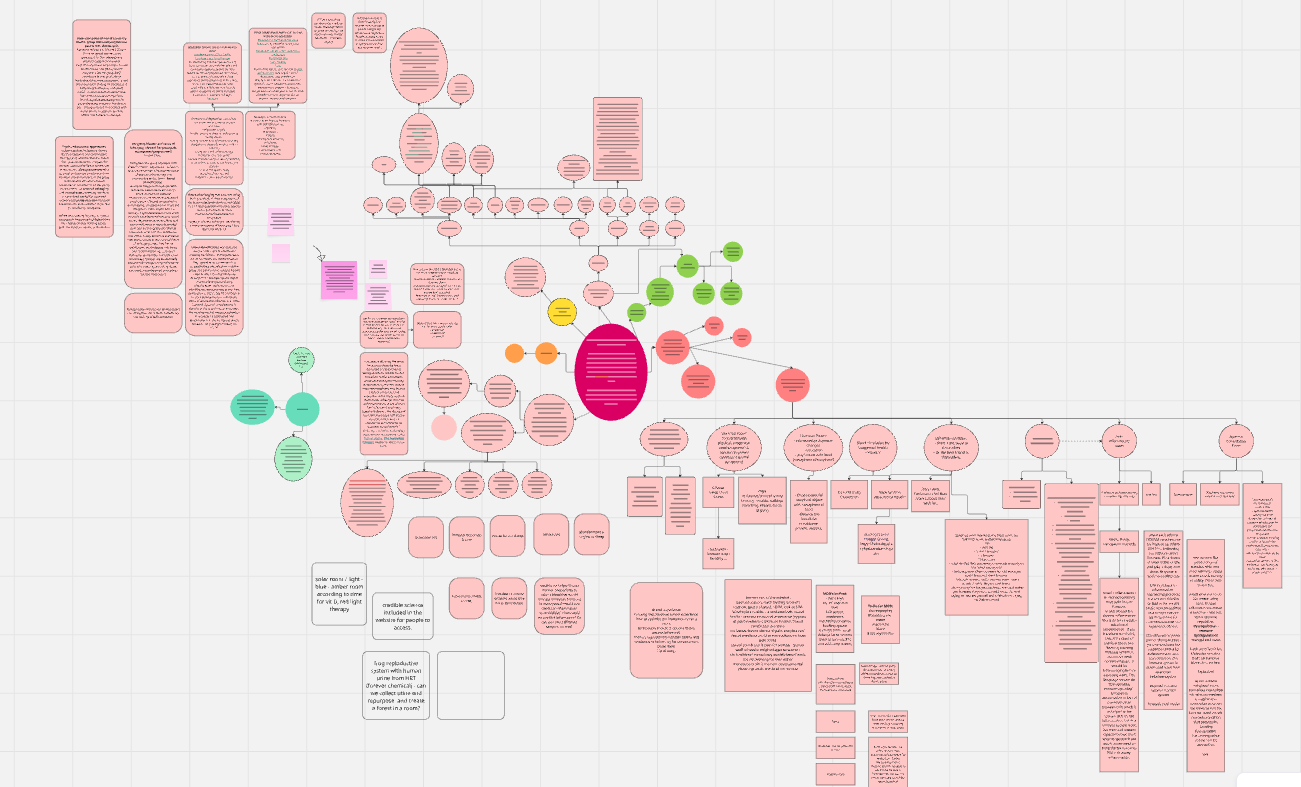
Mind map to organise ideas and narratives for developing the project. Image: Eugenie Lee
Social prescribing, as defined by the World Health Organisation (WHO), is a non‑clinical pathway that connects people to community‑based supports to strengthen health and wellbeing by addressing the social conditions that shape their lives. Using Social Prescribing as our conceptual foundation, Ajumma Wellbeing Clinic becomes a gentle choreography of care in which community, culture, story, and shared presence serve as the “prescriptions,” inviting participants into sensorial, culturally grounded spaces that function as hybrid treatment-retreat rooms. In these rooms, belonging, movement, joy, lived experience, and science become the evidence‑informed materials through which wellbeing is nurtured and restored.