
(NOTE: ‘women’ in this project refers to individuals who identify as such and/or are born with a genetic makeup that necessitates undergoing the female menopausal transition – peri-menopause, menopause, and post-menopause. For convenience, I will use the term ‘menopause’ to encompass the whole transition and the second half of women’s lives.)
This is a highly under-researched area. When I initially started researching menopause, the valid resources listed common symptoms but never included disrupted digestive issues, let alone the microbiome.

Robinson Research Institute, Adelaide University
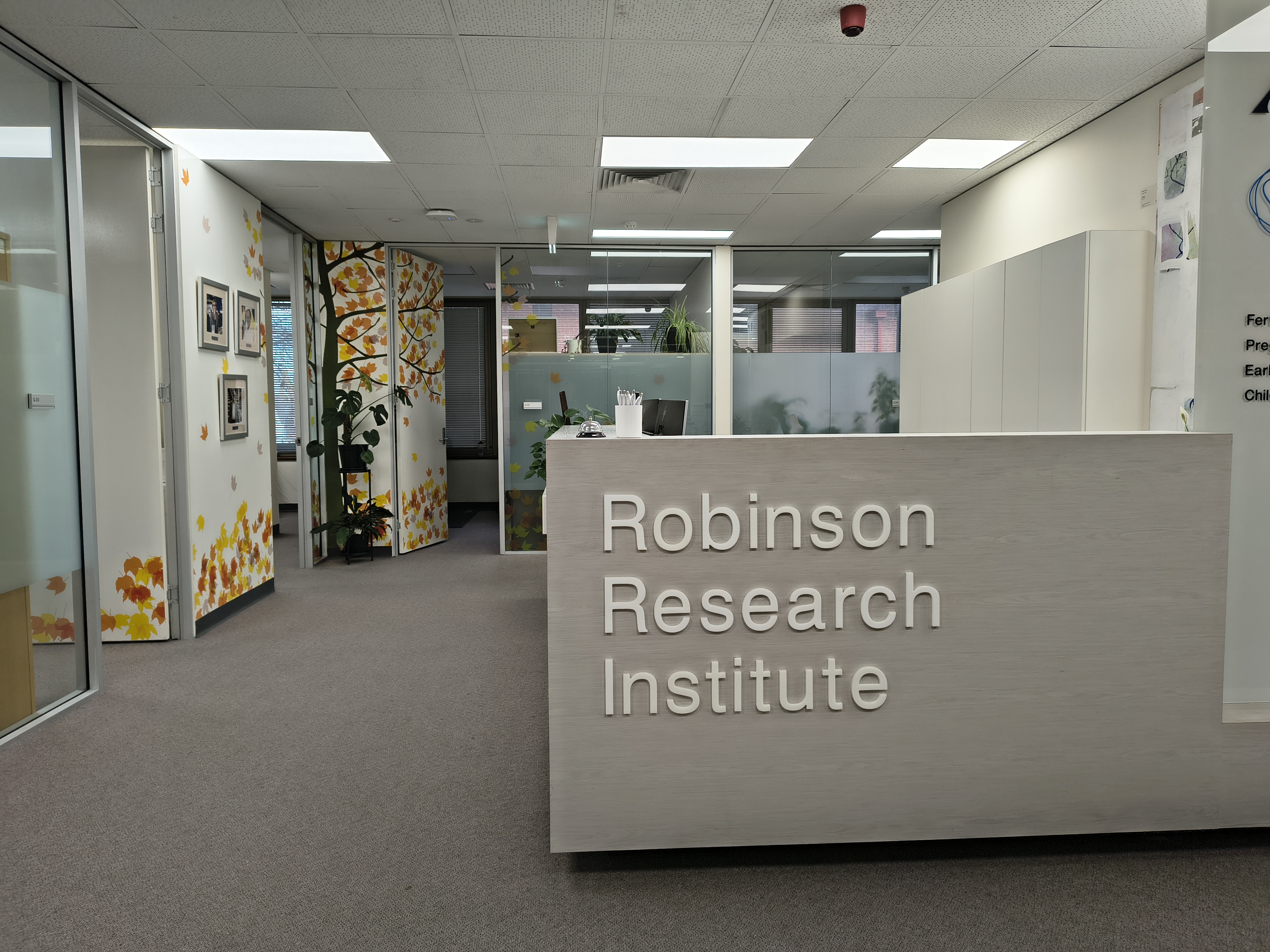
At the reception of Robinson Research Institute, waiting to see Prof David MacIntyre
I began to collaborate with Prof David MacIntyre, Robinson Research Institute, Adelaide Uni, to explore this fascinating topic. Robinson Research Institute has been primarily focusing on the female reproductive system, including, for example, postnatal depression. Research shows that women who experience postnatal depression are more likely to have severe menopausal symptoms later on. I am curious how their microbiome plays a role in this. Emerging research also says that women with endometriosis and adenomyosis, and/or who have taken contraceptive pills, have highly imbalanced gut microbiomes.
While waiting to see Prof David MacIntyre, I noticed a plaque at the Robinson Research Institute. I had a burning desire to write “Menopause Research” with a permanent marker there. I wish I had a marker with me. Would I get away with it if I did write it?
When Dr Carolyn Berryman and I met David for the first time, we discussed his current research on the microbiome of women with endometriosis, and he was also interested in the full lifespan of women’s gut microbiome, including menopause. This got me very excited, and I look forward to exploring this further with him later. I am going to ask him about women with endometriosis and how this may play a significant role in their menopause, because for some women, endometriosis continues after they reach menopause. But there is still so much unknown about endometriosis, let alone menopause; I would be surprised to get clarity on this. I will cover the content of our next meeting in future posts.
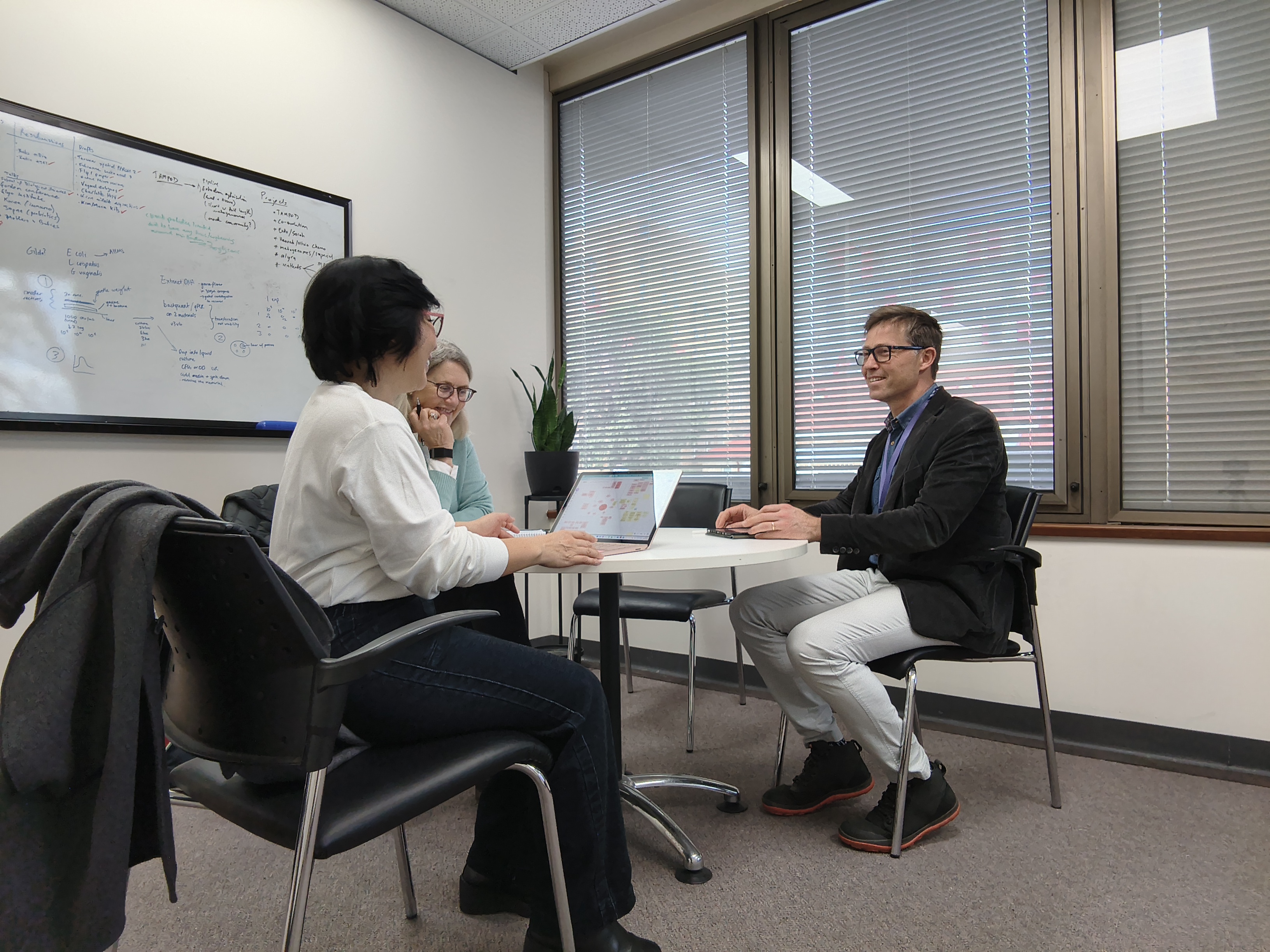
From right: Prof David MacIntyre, Dr Carolyn Berryman, Eugenie Lee
In the meantime, I’ve been doing my own research. Here is what we know so far about the relationship between menopause and the gut microbiome:
https://zoe.com/learn/gut-microbiome-menopause-changes
According to Zoe Science & Nutrition, our gut is a hormone factory. If we don’t look after our gut, the delicate balance of hormones will be disrupted, affecting our brain, inflammation, metabolic health, and overall wellbeing, including menopause.
As women transition into menopause, the oestrogen that has been supporting our gut health declines, leading to many gut and brain issues (anxiety, depression, memory, and executive functions).
Zoe’s podcast, episode (2 July 2 2026 issue) – ‘How to build a better brain: The 5 foods you need to protect your memory, mood and to cut dementia risk | with Felice Jacka (Professor of neuropsychiatry) and Tim Spector (Professor of Genetic Epidemiology).
https://www.podbean.com/ea/dir-k6d63-2f23ab13
Another research material I’ve found is a book titled ‘The Menopause Gut’ by Cynthia Thurlow. Here is a downloadable short info to learn about four gut types for menopausal women.
https://assets.cdn.filesafe.space/KoVj9BZlFtLUyD4Z4uVi/media/69c2545a427f6e27fd66d568.pdf
4 things you can do today to improve your immunity – interview with gastroenterologist Dr Giulia Enders.
https://www.youtube.com/watch?v=dVTF1xRt3sw
I am currently reading her two books, ‘Gut’, and ‘Organ Speak’. She also did a Netflix documentary called ‘Hack Your Health: The Secrets of Your Gut’.